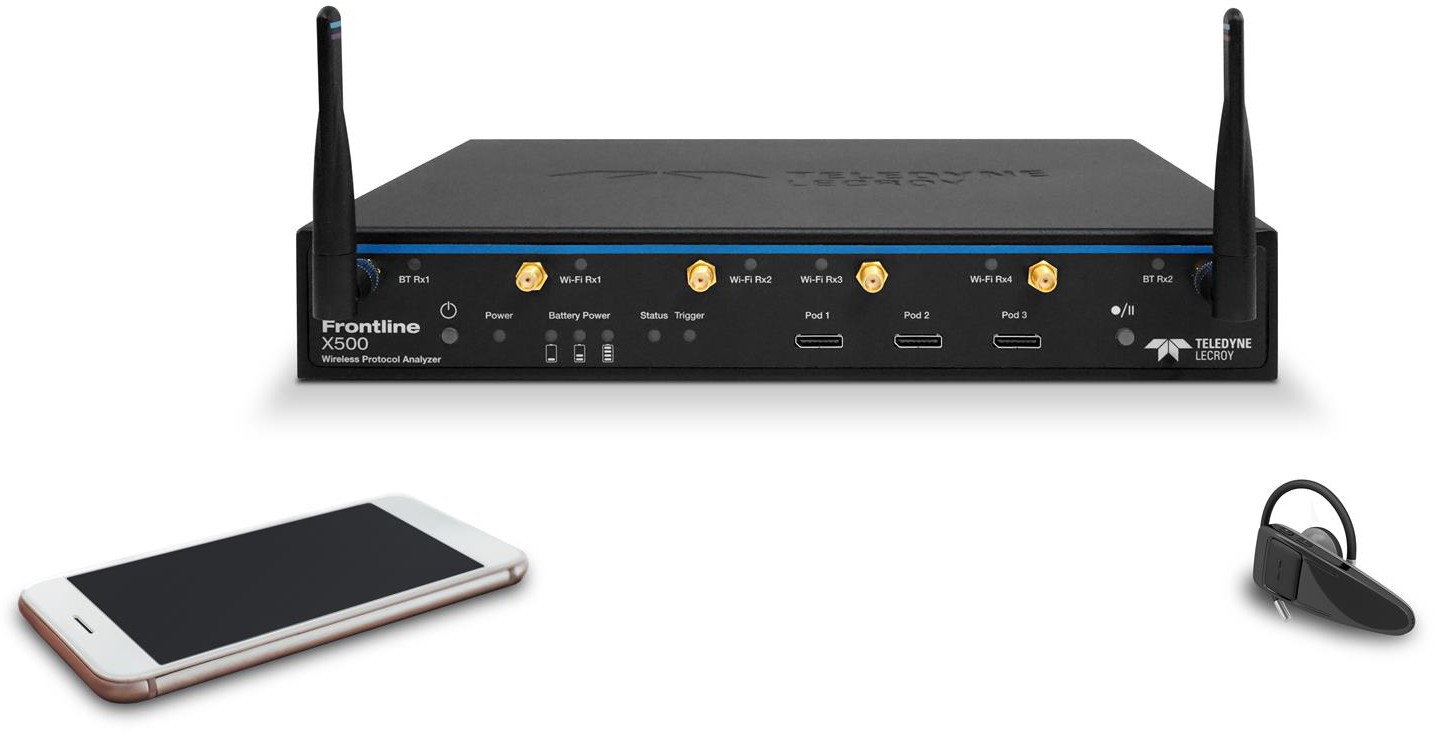
The X500/X500e and X700 are configured to use Antenna Diversity for capture to improve performance and eliminate the need to place the unit in a specific position when wireless channels are affected by multipath, fading, and interference. The signal received from the two antennas (BT Rx1 and BT Rx2) are added by an intelligent algorithm which adjusts the antenna weighting to maximize signal strength. The algorithm uses the spatial diversity of the antennas for three benefits.
First, it increases the probability of having a channel which isn’t in a fading null.
Second, it reduces the probability that a channel is interference-limited from another transmitter on the same or nearby frequency.
Third, the extra antenna increases the chance of less interference because generally the source of the interference isn’t physically co-located with the wanted transmission. The Antenna Diversity algorithm runs on packet level granularity so that the improvement can be maintained over wide-band operation when capturing signals from multiple devices.
Antenna Diversity doesn’t require special setup and is enabled by default in both AGC Manual and Auto modes. In AGC Manual mode a set attenuation is applied to both antenna channels. In AGC Auto mode the Antenna Diversity algorithm automatically determines attenuation to be applied to RF chain so that signal doesn’t saturate.
For the general scenario, (See figure below) position the analyzer between the DUTs so each antenna will receive a better signal from the DUT, which it is near as shown. Either DUT can be paired with either antenna (BT Rx1 or BT Rx2). The algorithm will automatically recognize and take advantage of this setup. No additional setup is required in the Wireless Protocol Suite software.